









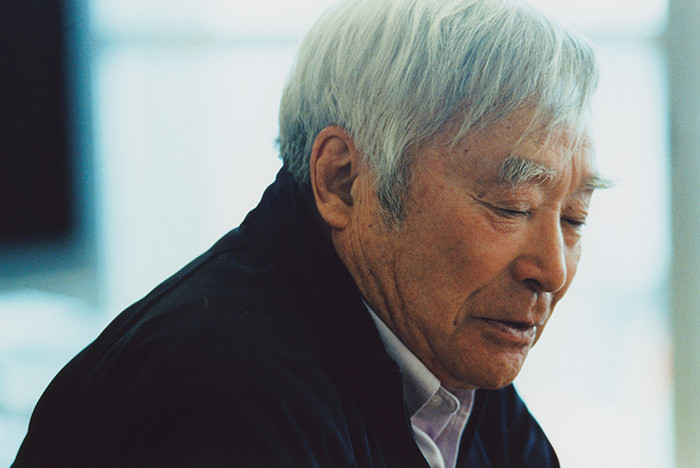
いつもオヤジの後をついて、雪山を滑ってました。
Always following behind my dad, skiing down snowy slopes
雪山を登って、心が変わった。
Climbing the snowy mountains, my heart changed.
「小学校4年生の時に、下手すると肺結核の怖れがあると入院していたんです。今考えればストレスでしょうね、登校拒否に近い状況。小学校5年生になって、オヤジが退院できたら蔵王へ連れてってやると、それを聞いた途端に病気なんかしてられないとベッドから飛び降りた(笑)。それでオヤジの後をついて、雪の蔵王へ行ったんです」
除雪車なんて走っていない、戦争のためにガソリンさえもない時代。炭で火を起こした蒸気バスは、山形駅から平坦な道だけは走ることができた。山の麓からは、スキーと自分の食料を背負って15㎞歩く。かつて高湯温泉と呼ばれた現在の蔵王温泉に到着する。ようやく温泉に入ってゆっくり泊まれるかと思いきや、そこから更に峠を越えて、敬三さんがスキー指導を頼まれていた東北大学山岳部のメンバーに合流する。
「オヤジが膝くらいのラッセルでも、僕の方は腰くらいまでありますから。置いていかれたら死んでしまうから、必死でついていきましたね。次の日からは大学の山岳部の連中と一緒に自由に滑って、とうとう最後は蔵王から仙台まで雪山を越えました。転校生で勉強もできないし、病気もしてる。学校で小さくなっていたんでしょうね。それが急に態度が大きくなった(笑)。命懸けの蔵王の山越えが、体よりも心をグンと強くしてくれたような、そんな感じがしました。オヤジにスキーの滑り方を教わった記憶はないですね。とにかく後をついて滑ってました」
交わした会話の記憶もほとんどないという。覚えているのは、後についてどこへ行ったか、何をしたのか、体感的なものばかり。夏休みになれば八甲田の万年雪の麓に一家でテントを張って、そこで暮らしながらスキーをして過ごす。冬になればアルプス、志賀高原、奥日光などなど、日本中の山々へと一生懸命に後をついていく日々。戦後すぐでさえ、スキーを担いで山へと向かった。父の後をついて回り、父の友人である山の大家からも技術を学んでいく。言葉などいらなかったのかもしれない。当然のように高校に入れば自分の意志で自然の中に身を浸すようになる。
「夏休みになると、青森の津軽半島でひとりぼっちでサバイバルのような生活をしていました。米と味噌だけ持って行けば、海へ潜って魚を突いて、アワビを獲って、生活できる。海岸でごろ寝していたら、気がついたら温泉に入っているような感覚で目が覚めて。満潮になっていて慌てて逃げ出したこともあります。まあ、自然に身を浸すっていう意味では、そんなようなことがずっと続いているのかもしれないね(笑)」
“When I was in the fourth grade I was hospitalized for a pulmonary tuberculosis scare. Now that I think about it I think I was just stressed out. It was more like truancy than it was damaged health. When I was in the fifth grade, my father said that when I get discharged from the hospital he would take me to Zao, and upon hearing that, I leaped from the bed thinking, ‘this is no time to be sick.’ After that, I followed behind my dad and we headed to Zao.”
There were no snowplows, and because of the war, there was no gasoline. There were steam buses leaving from Yamagata station, but only traveling on flat roads. They had to walk from the base of the mountain around 15km carrying their skis and provisions. Finally arriving at Zao-onsen, they thought they would finally be able to rest and enjoy the onsen, but continued on to join up with the mountaineering club from Tohoku University, who had asked Keizo-san for ski instructions.
“When my dad walked, snow came up to his knees, for me snow came up to my lower back. I gave it my all to keep up because if I would have died if I got left behind. From the next day, we were all finally able to ski freely and we gradually made our way from Zao to Sendai skiing and hiking. Risking life crossing over the Zao mountain range, I felt that it was my heart that got stronger, not my body. I don’t remember my father actually teaching me how to ski. I just followed behind him and skied.”
There is no real memory of the conversations. Only where he went following his father’s back, what they did, and the experiences they had are remembered. In the summer, they would stretch out a tent at the base of the never-ending snow in Hakkoda and ski. In the winter, he would diligently follow behind his dad and ski the Alps, Shigakogen, Okunikko, and other Japanese mountains. Even right after the war, they would carry their skis and head to the mountains. Follow behind and learn technique from the mountain. Perhaps words were not needed. Of course after entering high school, he further immersed himself in nature.
“During summer vacation, I would live a solitude and survival like lifestyle on the Tsugaru peninsula in Aomori. I could live by just bringing along rice and miso, and then catching fish and abalone. At times I would doze off on the beach but then wake up feeling as if I was in an onsen. When the high tide approached, I would panic and run off. But, in the end, that is what being in nature is all about, haha.”
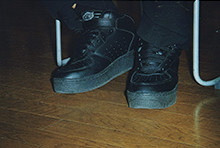
トレーニングのために、片足5㎏の靴を履いている。雄一郎さんには生活こそが、鍛錬の場。(*1)
*1_ Wearing 5kg shoes to train. For Yuuichiro-san, life is a training ground.
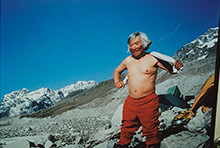
エベレスト登山の最中に乾布摩擦。清々しい自然から、エネルギーを取り込んでいるかのよう。(*2)
*2_ Drying off with a towel on Mt. Everest. Absorbing energy from the refreshing nature.
65歳で、再び父親の背中を見る。
At the age of 65, you stare at your father’s back once again.
「その頃、90歳過ぎたオヤジがモンブランに行こうと。しかも90歳から97歳までの間に、スキーのトレーニングで3回も骨折している。普通は90歳を越えて骨折したら、そんな危ないことをって言うけれども、うちでは誰も止めない。オヤジは骨折を治せば大好きなスキーができる、モンブランを滑れると。とうとう99歳で一緒に行きましたからね、モンブラン滑っちゃったわけですから。やっぱり言葉よりも後ろ姿。それが、一番影響が大きいですよ。僕もどうせ死んだ気になれば、5年間でエベレスト登れるんじゃないかと」
以降、70歳、75歳、80歳と三度のエベレスト登頂を果たすのだが、二度目のチャレンジでは、一緒に登っていた息子の豪太さんが死の際まで追い詰められる。8000mを超えた地点で肺水腫、脳浮腫が併発する。命が危ない状況で、冒険の遺伝子は何を考えていたのか。
「自分が死んだ方が楽ですよ。豪太が危ないっていう話を聞いた時に、第五キャンプ、8400mのバルコニーのひとつ下にいたんですが、いざとなれば救出に降りようと待っていました。ただローツェフェイスを降りているし、下からヘルプに向かった隊と合流しているから大丈夫だと。それで僕は頂上へ向かったんです。死ぬのが一番楽なんですよ。8800mくらいの氷の壁には死体がぶら下がっていて、手がロープに絡んでいたりする。それを除けながら登る。そういう世界です。でも、極限まで追い詰められても、130%生き抜こうという意志がなかったら。みっともなくてもなんでもいいから、自分は生きるんだっていう意志がなければ帰ってこれなかった。僕は80歳の3度目の時にそう思ったけど、あの時の豪太もそうですよ。なんとかして生きるんだっていう意志。それが遺伝子と言えば、そうなのかもしれないね」
当時、豪太さんのギリギリの状況で、なんと先祖の霊が助けながら道先を案内したという。同じように雄一郎さんがオーバーハングの難所をクリアできたのは、敬三さんが天界から降りてきて、羽を生やして助けてくれたから。そんな突拍子もないような不思議な話でさえ、なぜか信じられてしまうのは、雄一郎さんが常識に捕らわれるということがないからか。小学生で冬の蔵王で覚醒して以来、言葉よりも、自分の体を動かして世界を理解してきたからこその人としての強さがある。
「今はね、中学生の孫が日本の百名山登るって富士山行ったり丹沢行ったり毎週してますよ。まあ、孫も同じようなことをしています(笑)」
体で世界を把握する喜びと、極限状態での強い意志。それは背中で語り継がれているものだった。
“At that time, dad said for us to go to Mont Blanc. But, between the ages of 90 and 97, he had three separate bone fractures from ski training. Usually, if someone over 90 fractures a bone, you stop them from doing such dangerous activities, but no one could stop him. If his bones healed, he would do what he loved most, which is to ski. Finally, at the age of 99, we went and skied Mont Blanc. As expected, starring at my father’s back once again had the biggest effect on me, more than what any words could accomplish. I too felt that if I didn’t care about dying, I would climb Mt. Everest in five years.”
Since then, he has summited Mt. Everest three times at the ages of 70, 75, and 80, and on the second try, his son Gota accompanied him, but was trapped in extreme conditions and on the verge of death. Passing 8000 meters brings risk of pulmonary and cerebral edema. There must be a certain element of having adventurer’s DNA that becomes apparent when faced with these dangerous situations.
“It would be easier if I died. When I heard that Gota was in danger of dying, I was at the fifth camp, below the 8400-meter up balcony, and waited to see if we needed to go down to save him. However, they were climbing down the Lhotse face and help was climbing to meet them. So I headed for the summit. Dying is truly the easiest route. There was a dead body entangled and hanging from a rope on the 8800-meter high ice face, but you climb around it. That is the type of world you are in. But, you have to have a will to live and fight on at 130% when you are trapped in the upmost severe conditions. Whatever shameful, indecent, or improper actions needed, you do what it takes to live on, because without that will to live, I wouldn’t have been able to make it home. That is how it was like for me the third time I climbed, when I was 80, and that is how it was for Gota. He had the will to live on and fight. I guess you can say that is the truth of genetics.”
At the time when Gota-san was on the verge of death, it is said that the spirits of his ancestors lead him to safety. In the same way, the skies opened up and Yuichiro-san was presented with a pair of wings helping him to clear the dangerous overhang passage. Yuichiro-san says he is able to believe in such things because he is not confined by common sense. Ever since waking up in Zao as an elementary school student, he has used his own body and movements, not words, to understand the world, and this is what provides him with his strength.
“Right now, my grandchild, a high school student, travels every week to different mountains. I guess he is living the same type of life, haha.”
Understanding the world with your physical being and having a strong will in the upmost severe conditions. That is what has been inherited by diligently following behind someone.
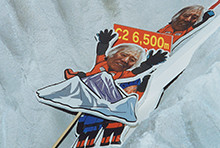
エベレスト登頂までの道のりを示した図。6500mキャンプ2での明るい表情。(*3)
*3_ Map showing the route up Mt. Everest. A bright expression taken at the 6500m camp 2.
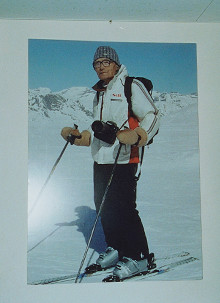
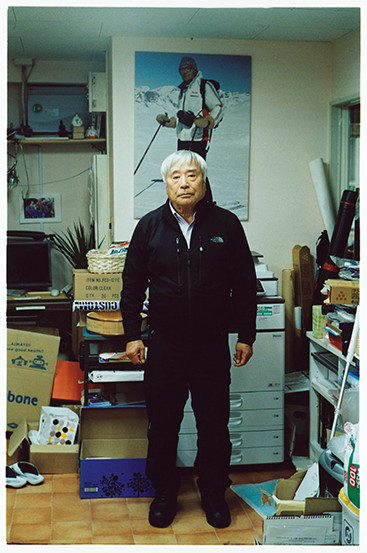
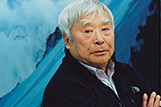
三浦雄一郎
エベレストへの三度の登頂、世界七大陸の最高峰でのスキー滑降など、数々の偉業を成し遂げている。次の目標は、70歳の時に登ったことのある世界第六峰チョー・オユー山頂から、85歳でスキー滑降をすること。
Yuuichirou Miura
Summited Mt. Everest three times and
summited the highest peak on all seven
continents. His next goal is to ski down the world’s sixth highest peak, Mt. Cho Oyu, at age 85, in which he climbed at the age of 70.