TOP > INTERVIEW 01 YOHEI NARUSE

INTERVIEW 01 YOHEI NARUSE 成瀬洋平

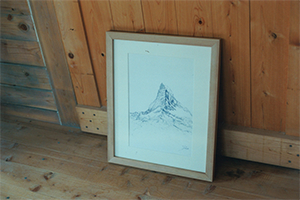
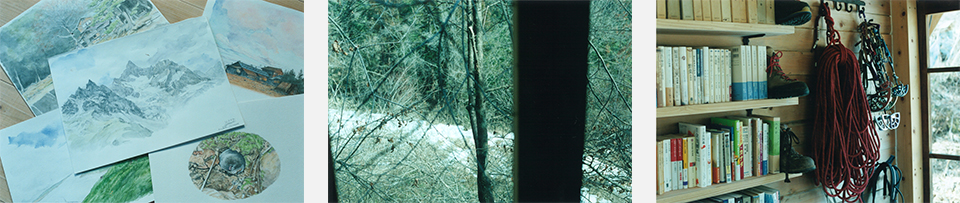
セルフビルドの小屋には、本棚とほんの少しの生活用品、
そして山へと向かう道具だけが置かれていた。
イラストレーター、文筆家の成瀬洋平さんのライフスタイルは、
自然の中に身を浸すことで熟成されている。
岐阜の山中、消え残る雪がまだ目に付く土地で話を聞いた。

In addition to mountain climbing gear,
only a bookshelf and the bare necessities can be found in
this self-built cabin.
Illustrator and writer, Yohei Naruse,
lives a life absorbing nature.
On the still snow trickled mountains of Gifu,
we listen to his story.

できるだけ山との境界のない小屋にしたかった。

初めて北アルプスの燕岳に登ったのが、小学1年生のとき。父親がセルフビルドで建てた自宅のある岐阜の山中で、イラストレーターの成瀬洋平さんは育った。星野道夫の『アラスカたんけん記』に出会ったのが小学3年生。「いつかこんなところに行ってみたいなと思った」という。お年玉で少しずつ山道具を揃えつつ、星野道夫が写した遥か果ての荒野へ訪れるためには、“技術”がなければと自らの意志で山へ通い、クライミングを始めた。ロープではなくザイルと呼ばれ、クライミングがまだまだ“危険なもの”としてしか認識されていなかった時代。けれど、山で遊ぶことが、日常だった。

「お金もなかったですから、背負子を自作したり、先が割れていない足袋を買ってきて、ソールをカッターで削ってクライミングシューズにしていましたね(笑)。高校時代には、家にクライミングの壁を作って、学校から帰って来たら毎日のように練習するっていう感じでした」

He was a first grader in elementary school the first time that he climbed Mt. Tsubakuro in the Northern Alps. Yohei Naruse was raised in his father’s self-built cabin in the mountains of Gifu.
The first time that he read Hoshino Michio’s “An Alaskan Voyage Diary”, was in his third year of elementary school. “I want to go somewhere like this someday.” By saving his New Year’s gift money he gradually purchased his own mountaineering gear and started climbing to develop the necessary skills that he would need in order to reach the far off lands pictured in Hoshino Michio’s work. Climbing was still considered a “dangerous pursuit” at that time, but it didn’t matter, climbing was his daily life.

“I didn’t have money, so I made my own back pack. I also purchased a pair of tabi shoes, sharpened the soles with a knife, and used them as climbing shoes (haha). When I was in high school, I built my own climbing wall in my house and practiced every day.”

足りないものは、自分の手で生み出す。木工作家である父親の影響もあるのだろうが、成瀬さんはとにかく手を動かすことで、自分の思想を具現化していく。絵を描くことも同じ範疇に属すのだろうか。星野道夫や『グレートジャーニー』で知られる関野吉晴など、自然との関わりを表現する人々の影響を受けて育ったことが、絵を描くことへ、表現することへと向かった理由のひとつだった。「絵を描いて暮らしていくためには、東京へ出なければ」。山梨の大学を卒業したばかりの成瀬さんはそう考えていた。上京当初は山関係の広告代理店に勤めていたが、次第に雑誌にイラストを提供する仕事が増えていく。アウトドア雑誌での連載スタートを機に会社を辞め、山をテーマに、イラストと紀行文を寄稿することが生業となっていった。けれど、取材で山へと訪れても、いわゆる弾丸ツアーで帰って来なくてはならない。深夜バスで到着し、登ってすぐに降りてバスで戻り、深夜まで原稿を書く生活に疑問を覚え始める。外に出てもアスファルトばかりの東京が、「ああ、ちょっとしんどいな」と、岐阜へと帰ることに。自分の“山”を取り戻すための帰郷だった。

「どこに住もうかと考えて空き家を探したんですが、都合のいい家が見つからなかったんですね。小さい頃から遊んでいたこの山にも愛着があったので、ならば自分で小屋を立てようと思ったんです。自分で建てた小屋なら家賃もかからないから、長く旅に出ることになっても大丈夫かなって」

実家のすぐ近く、半分雑木林になっていた休耕田を借りた。借地なのでコンクリートを打つことも砂利をまくことも禁止。そのために、軽やかな小屋を建てることにした。谷から石を拾ってきて土台とし、安い板材を入手して、ほとんど機械を使うことなく小屋を建てた。父親からは知恵とほんの少しの労力を借りたが、ひとりですべての工程を為すことをルールとした。

「機械を使えば自分の力以上のことが簡単にできてしまうけれども、そうじゃなくて、自分の生身の身体だけでできることをしたいなと思ったんです。人間がコントロールできないものではなく。自然に肉体だけで働きかけたときには必ず限界がある。それ以上を求めてしまえばしんどいだけですから。草が生えてきたり土地が沈んだり、自然と自分自身の接点に小屋を作ったら面白いんじゃないかなって思ったんです。そこで暮らしながら絵を描いたら、違うものが描けるんじゃないかなって。岐阜に帰ってきて早くも4年が過ぎましたが、ようやくもうすぐ完成です(笑)」

Create with your own hands what you need but do not have. Being influenced by his father who worked as a carpenter, Naruse-san embodied his own ideology and set off to live life by his own hands. His illustration work falls under the same category. Being raised under the influence of artists such as Hoshino Michio and Sekino Yoshiharu, known for his “Great Journey”, who express their relationships with nature, is one of the reasons Naruse-san started to draw. “In order to pursue illustration I must go to Tokyo.” This is the idea that Naruse-san took to heart after graduating from university in Yamanashi-prefecture. Upon his move to the capital, he found work at an advertising agency specializing in mountain themes but gradually found more and more illustration work for magazines. He took an opportunity from an outdoor magazine, quit his job at the company, and started illustrating and writing full time. However, in order to gather the necessary data for his artwork, his work trips to the mountain were nothing more than single day trips that often involved a night bus to the location, a quick climb, and return to the city where he would write and draw into the early morning. Naruse-san started having doubts about this new lifestyle. The asphalt jungle of Tokyo became “tiresome”and he decided to move back to Gifu. This was a homecoming that would allow him to take back the mountain.

“While deciding where to live, I started searching for an empty house somewhere but couldn’t find anything I liked or anything suitable. I truly loved growing up here when I was young so I contemplated building my own small place. I wouldn’t have to pay rent, which meant that leaving for extended periods of time on long journeys wouldn’t be a problem.”

Naruse-san rented out a piece of idle farmland that was half overgrown with trees. Because it was rented land, it was strictly forbidden to lay concrete or gravel and thus he started to construct a less than serious cabin on the ground as is. Hauling stones from the valley he created the foundation and with using minimal machinery, scraps of wood, and other inexpensive materials, he was able to complete the cabin. Other than the knowledge that was passed down from his father, and other than the small amount of manual labor help that he received from his father, he made it a personal quest to complete the entire process on his own and by the limits of his own hand.


“I wanted to test my own limits and complete the project with my own strength. Using machines allows you to easily accomplish tasks beyond the human body’s capabilities. There is a limit to what the body can naturally do. Just as grass grows or the earth wears away, I thought it would be interesting to try and create a link between my own being and nature. Living here and drawing... perhaps I would be able to draw something new. Something different. It has been four years since I came back to Gifu and I am finally just about finished (haha).”

できるだけ山との境界がないような小屋にしたかったと成瀬さんは言う。廃校となった校舎から譲り受けた窓を大きく使い、引き戸にして縁側を作る。野鼠の穴を観察できる小さな窓も設けた。帰郷当時はプライベートで山や岩へと向かう時間がそれほど取れなかったが、今では午前中に仕事をし、午後に岩へと向かうという理想的なスタイルを手に入れた。山と共に生きる中で、ライフスタイルだけでなく、描く対象も変わりつつある。

「自分自身の力量で自然と関わるっていう考え方は、やっぱりクライミングによって得た部分もあると思うんです。フリークライミングは、いろんな道具を使ってまで岩に登らないという思想ですから。それに、クライマーがラインを見つけて、そこでいろんな動きを組み立てていくのって、まるで自然から与えられた謎を解くような感じなんです。どうやったら自分の身体だけで登ることができるのか。そのラインも動きの組み合わせも、ひとつの作品。今は風景だけでなくクライマーの友だちもモチーフになっていたりします。いいなと思った風景や瞬間を表現したい。もっと言えば、その絵を見た人が、僕が見たときの感覚と同じものを感じてくれたら、そんな絵が描けたらいいなって思っています」

等身大で生きること。そして手を動かし続けること。山での生活が日常になった成瀬さんが得たのは、幼き頃と同じような自由な感覚ではなかったか。日々、岩に取り付き、今日できなかった課題を克服するために、自分自身の能力を上げていく。シンプルな挑戦こそが、人格をカタチ作る。成瀬さんは、澄んだ眼で、穏やかに山を見上げている。

Naruse-san explains to us his desire to create a cabin in the mountains free from boundaries. Using windows from a closed down school building to create a sliding door, he completes his veranda. He even adds a tiny observation window. Upon first returning to Gifu, he was unable to find private time where he could visit the mountain, but he has finally been able to adapt a lifestyle that allows him to work in the mornings and journey into the mountain in the afternoon. Living like this, it is not just his lifestyle that is changing, but the subject of his illustrations as well.

“I believe that climbing has also influenced my desire to not only live in nature, but by the confines of my own personal being. Ideally, free climbing is climbing without the assistance of tools or gear. A climber finds his line and climbs using the body’s capable natural movements, as if nature is throwing you a puzzle. How will you climb using only your body? That line, that puzzle, and those movements create a piece of art. Right now my climbing friends are also my motif, not just the scenery. A good landscape, a good moment, anything that creates a spark for me, I want to express. If someone can look at my illustration and feel the same feeling that I had at the moment I drew it, then I want to draw it.”

To live a full life. To continue to live by your own hand. Naruse-san, living day by day in the mountains, has regained the freedom and free spirit he once had as a child. Clinging to the rocks, he works to raise his limits in order to overcome the challenges from the day before. Taking on simple challenges creates character. Naruse-san looks up at the mountain with clear vision.

1982年岐阜県生まれ。『岳人』『PEAKS』『PAPERSKY』など、山や旅を中心とする媒体で活動している。
アウトドアショップでの展覧会なども多数開催。
ブログ「成瀬洋平の素描日記」 http://d.hatena.ne.jp/naruseyohei/

Born 1982 in Gifu Prefecture. Notable mountain themed works: “Gakujin”, “PEAKS”, “PAPERSKY”. Multiple exhibitions.
Blog - “Yohei Naruse Sketch Diary” http://d.hatena.ne.jp/naruseyohei/

INTERVIEW 02 YAYOI ARIMOTO 在本彌生